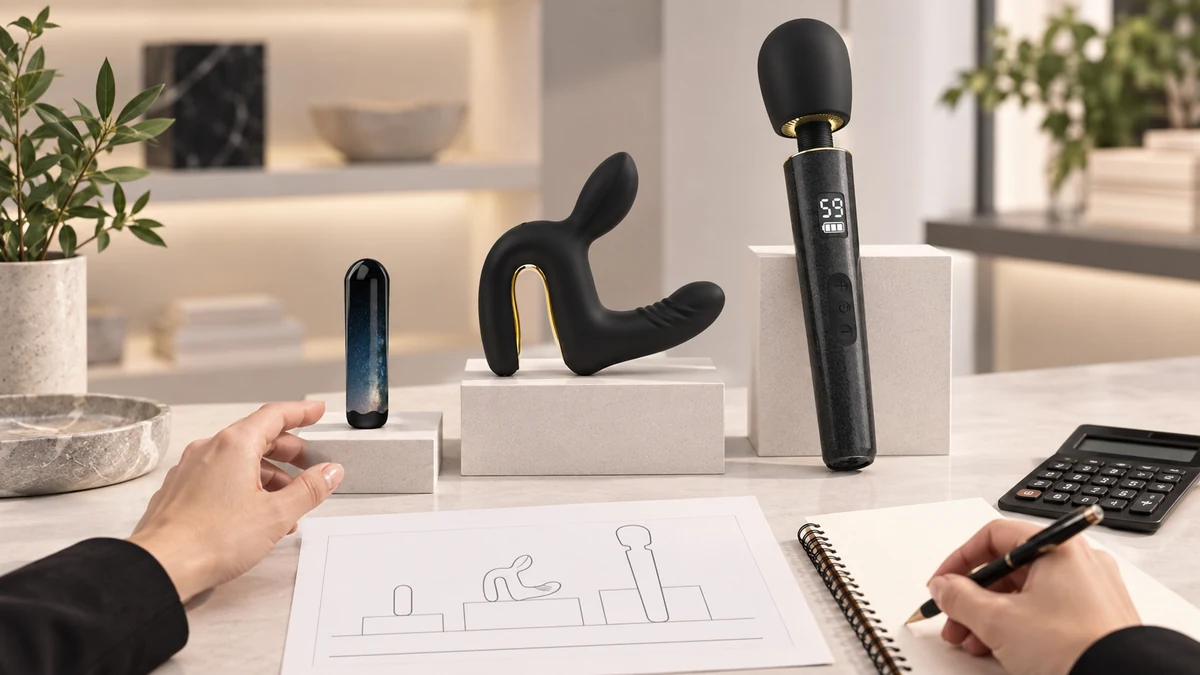
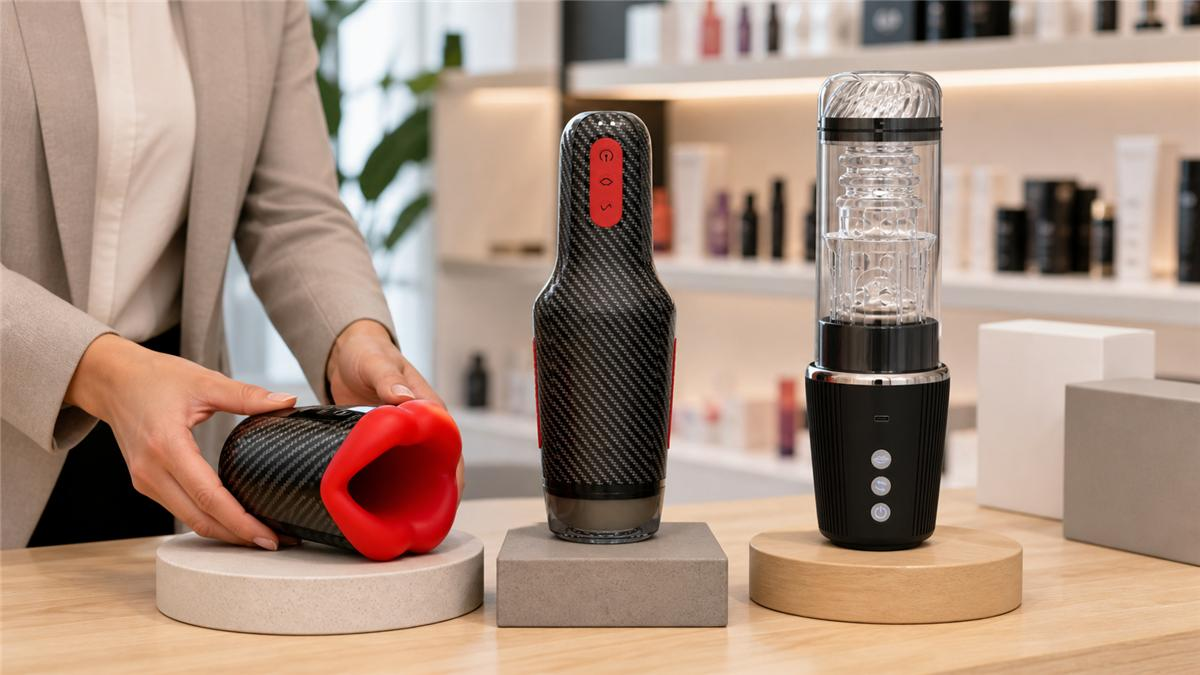
A store can display three sex toys at three different prices and still have no real price ladder.
The common pattern is easy to recognize. The products look similar and the feature lists overlap. The lowest priced item is called basic, the middle item is called upgraded, and the highest priced item is called premium. Customers cannot see what the additional money buys, so they choose the lowest price, the largest discount or the product with the most reviews.
The pricing may not be the main problem. The three tiers may simply be doing the same job.
A useful entry, core and premium assortment is not a list of purchase costs from low to high. At every step, the customer should receive a clear, verifiable change in value that matters to their need.
Compare price points within the same customer need
Do not put a compact vibrator, a large wand and an app controlled product into three price tiers and call them entry, core and premium. They may solve different problems, and the price difference may come mainly from size, construction or product type.
Build the ladder within the same customer task or a closely comparable category. For example:
- All three serve first time buyers, but the control complexity changes.
- All three support the same type of stimulation, but the size, structure or control experience changes.
- All three belong to the same product category, while ease of use, feature range and support content improve in a clear sequence.
When the basis of comparison stays consistent, customers can understand the price difference. Retailers can also see whether a product adds a useful choice or merely duplicates inventory. A new retailer that has not yet defined its core customer tasks can start with our first sex toy assortment guide before assigning price roles.
Shopify’s explanation of price lining describes related products offered at different price points and warns that a price ladder can create confusion when customers cannot see a meaningful difference between tiers. The same principle applies to sex toy assortment planning.
Entry tier: Reduce decision difficulty, not quality
The job of an entry product is to make the first decision easier. It is not an excuse for incomplete information or unpredictable performance.
A credible entry product should provide at least the following:
- Its main purpose can be explained quickly.
- The controls are not unnecessarily complicated.
- Size, material, charging or battery method and package contents can be verified.
- The product page and packaging do not hide limitations behind vague language.
- A retailer can explain in one sentence who it suits and who may need another option.
An entry product can remove nonessential features, but it should not lower the price by relying on unclear material claims, missing information or accessories that cannot be replaced. A low price that wins the first sale can still create support problems and customer distrust.
Core tier: Add one improvement the customer can feel
The core tier often carries the main conversion and repeat purchase role in a store. It does not need every available feature, but it needs one improvement that changes the customer’s choice.
That improvement may be:
- A size or structure that fits the target customer better.
- A control method that is easier to use.
- A function that matters to the primary use case.
- More complete and verifiable material, charging, cleaning or packaging information.
- Better content support that helps customers compare and use the product accurately.
The improvement must be relevant. More vibration patterns do not automatically create a better product. A larger box does not create a better experience. Ask one question: what change will the customer notice most clearly after paying the difference? The comparison also depends on complete source data. Our sex toy product data guide for ecommerce listings explains the fields that should be verified before a product is presented as an upgrade.
If the only answer is that the product has more specifications or looks more premium, the core tier has not been defined.
Premium tier: Deliver a different level of value
A premium product is not the core product in a prettier box with more adjectives. It needs a stronger purchase reason that can still be verified.
Premium value may come from a substantially different structure, control experience, design execution, ease of use, accessories, support or a solution for a more specific customer. Each claim must return to evidence for the individual product. Avoid unsupported absolute claims such as safer, stronger or more durable.
Use a simple test. Hide the price and brand, then leave only the real dimensions, structure, functions, controls, materials, accessories, package contents and support information. If a buyer or salesperson can still explain why the premium product serves a different need, the tier may be valid.
If the differences disappear after the price is hidden, the premium tier may be another duplicate SKU.
Use the one sentence test to remove duplicate choices
Write one sales explanation for each tier:
- Entry: Completes the core task with a lower learning and operating barrier.
- Core: Adds the most noticeable improvement within the same task.
- Premium: Provides a structural upgrade and more complete support for a more specific requirement.
Then check whether each real SKU can fill that sentence with facts.
Consider this hypothetical example, which does not represent AIYUEWEI models or market prices. A retailer selects three products within one comparable product type. The first uses simple controls and complete basic information, so it serves the entry role. The second makes a clear improvement to the control or structure that matters most to the target customer, so it serves the core role. The third does more than add modes. Its structure, way of use or support serves a more specific requirement, so it serves the premium role.
If the second and third products can only be separated by saying that one has more functions, the retailer should not rush to buy both. Keep the option with the clearer role and use the remaining budget to cover a customer task that is still missing. Our sex toy variant and SKU planning guide provides a related method for deciding when a color or feature variant creates a useful choice instead of another inventory record.
Do not copy a universal price range
Sex toy purchase and retail prices vary by country, channel, brand, material, construction, packaging, taxes and promotion strategy. There is no fixed US dollar range that defines entry, core and premium for every market.
Faire’s 2026 wholesale adult toys guide includes wholesale and retail observations from its platform and discusses different retailer types. Those figures are a dated reference from the Faire marketplace. They are not a global pricing standard.
Use your own target market as the operating baseline:
- Collect current retail prices for the same customer task in your channel.
- Calculate landed cost, payment fees, storage, promotion and after sales allowance.
- Group candidates by customer perceived value before forcing them into price bands.
- Check whether each tier can support the target margin and replenishment conditions.
- After launch, monitor product views, conversion, gross margin, return reasons and replenishment speed separately for each tier.
A price ladder is an operating hypothesis. It should not become a permanent label that is never reviewed.
Five checks before buying the assortment
First, confirm that the customer task is the same. Products that solve different tasks should not be forced into one ladder for convenience.
Second, verify the real differences. Size, material, structure, controls, charging, accessories and package contents must come from reliable product information.
Third, confirm that the differences can be shown. Store staff, product pages and images should all be able to explain the upgrade. A complex product may require more education content.
Fourth, test the purchasing economics. MOQ, units per carton, packaging volume, replenishment timing and landed cost determine whether a tier is worth keeping.
Fifth, define an exit condition. If a product sells only when discounted, or customers consistently fail to understand how it differs from the adjacent tier, decide whether the problem is the page, the price or the SKU itself.
Lightspeed’s retail assortment planning guide emphasizes that assortment planning is not simply buying more stock. It also requires attention to cash flow and a balance across categories, types, colors and price points. For a sex toy retailer, price roles and inventory roles must be managed together.
How AIYUEWEI Can Help
AIYUEWEI can organize candidate sex toys by real product task and verifiable specifications, based on a retailer’s target market, sales channel, main customer, planned retail price and current categories. For a specific price ladder, we can compare dimensions, structure, controls, materials, charging, package contents, MOQ and carton information. We can also identify which differences are suitable for customer communication and which fields still need confirmation.
We do not invent local retail prices, margins, sales results or premium conclusions for a retailer. The retailer should assign final tier roles using its landed cost, customer mix and real sales data.
Frequently Asked Questions
Does every category need three price tiers?
No. If the customer group is focused or the SKU count is small, two clear tiers may work better than three vague ones. The number of tiers should follow customer needs and real product differences, not a fixed template.
Does a premium product need more functions?
No. Only functions that matter to the target customer, can be understood and are supported by evidence create value. Irrelevant functions can add cost, explanation difficulty and after sales complexity.
Can an entry product use lower specifications?
It can remove nonessential features, but product identity, material, size, controls, power method and use boundaries must remain accurate. Entry means easier to begin, not permission to accept unclear information or uncontrolled quality.
How do I know whether the middle tier is necessary?
Check whether it connects a real need between entry and premium. If customers can understand the upgrade and the product meets margin, inventory and replenishment conditions, it has a valid role. If the difference depends only on price and adjectives, select again.
Next Step
Share your target market, sales channel, current categories, planned retail prices, budget and product type through the AIYUEWEI inquiry page. We can organize the verified differences and open questions across candidate products, so you can assign entry, core and premium roles using your local costs and sales data.