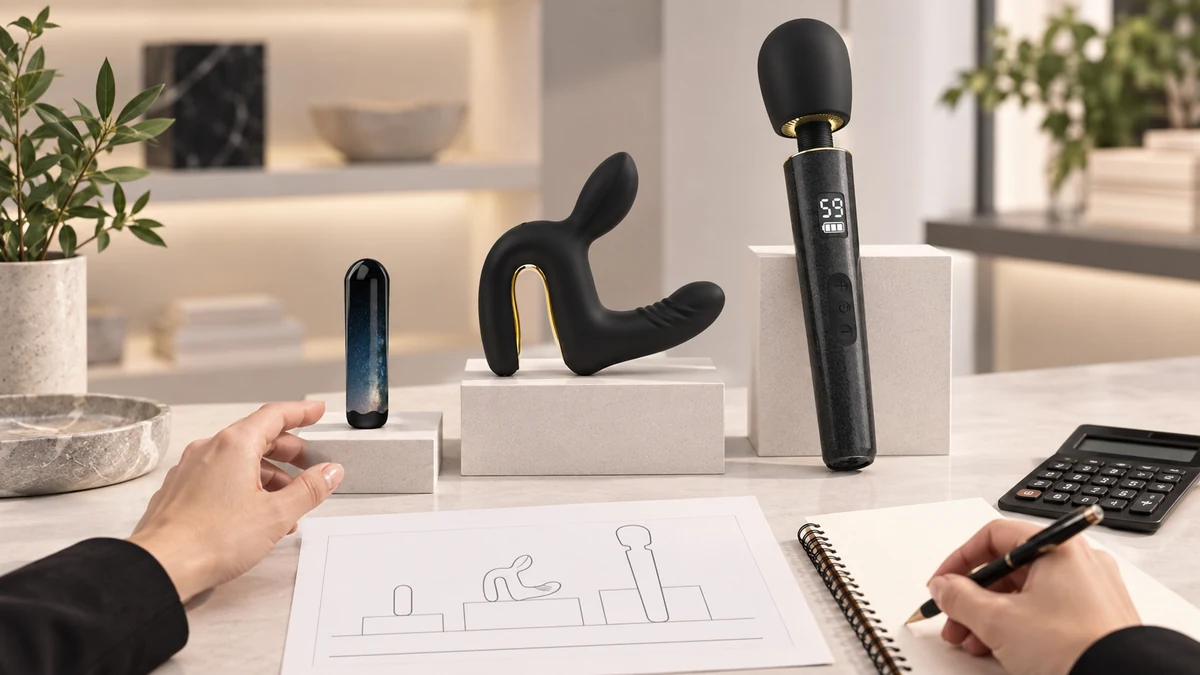
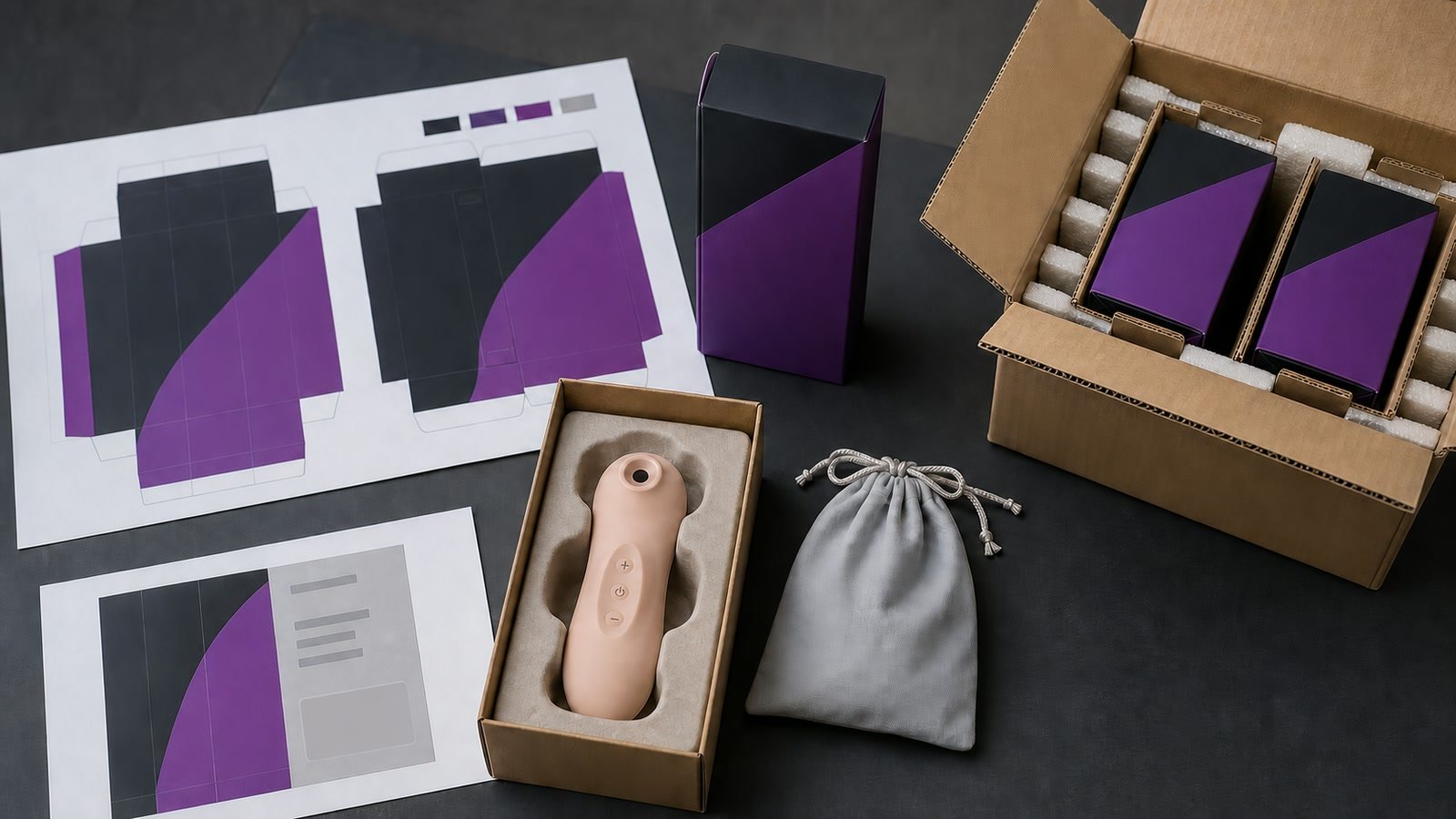
Sex toy packaging requirements should be approved as a complete production brief, not as a single attractive render. Before printing begins, a wholesale buyer should confirm four separate layers: the artwork version, the inner packing structure, the retail information, and the transport protection.
This distinction matters because each layer answers a different question. The artwork controls what will be printed. The inner pack controls how the product and accessories fit. The retail information supports identification and market review. The shipping pack protects the retail unit as it moves through storage and delivery.
Why a packaging render is not enough
A render can show the general look of a box, but it may not show the final dieline, every side panel, the insert, the barcode position, the instruction leaflet, or the master carton. If the buyer approves only the front image, the printer and packing team still have to interpret the missing details.
A stronger approval process separates visual approval from production approval. The buyer can then see exactly which file, structure, and packing method will control the order.
1. Lock the artwork version
Start with one clearly named final artwork file. It should match the approved dieline and include every panel that will be printed. The review should cover the product name, model reference, logo use, colour references, image placement, required symbols, and the position of any variable information.
Version control is essential. A useful approval record identifies the file name, revision date, approver, and any remaining condition. Avoid sending several files with names such as final, final new, and final revised. That creates room for the wrong version to reach the printer.
When colour accuracy is commercially important, agree on the reference that will be used for approval. A screen view is useful for layout, but it does not always answer every print question. The required proof method should be agreed before the print run.
2. Approve the inner pack and product fit
The retail box is only one part of the packaging. Buyers should also approve the bag, film, tray, insert, ties, accessory compartments, charging cable position, instruction leaflet, and any other item inside the box.
The inner structure should match the exact product and accessory set. If the product can move inside the box, if a cable sits against a visible surface, or if the insert does not hold the approved version, the finished pack may look different from the approved render even when the printing is correct.
Ask for a packing sequence or a clear sample photo that shows how every included item is placed. This creates a practical reference for packing and later inspection.
3. Confirm retail information before printing
The information panel should be reviewed for the destination market and sales channel. The buyer’s compliance reviewer should confirm the required language, responsible business details, instructions, warnings, product identification, recycling information, and any other market specific content. These requirements can vary by country, channel, product, and business model, so they should not be copied from an unrelated package.
Barcode approval deserves its own check. Confirm who owns and supplies the identifier, which product version it represents, where it will appear, and whether the final printed symbol can be scanned. GS1’s barcode guidance notes that placement should consider the packaging process and avoid locations where the symbol may be obscured or damaged, such as a fold, flap, or carton edge.
Do not treat a barcode image as decoration. It connects the physical package to the product record used by a retailer, marketplace, warehouse, or distributor.
4. Approve transport protection separately
A retail pack presents the product. A transport pack protects it. Buyers should review how retail units are arranged in the inner carton or master carton, how empty space is controlled, how accessories are kept in position, and how the carton count is recorded.
The approval scope may include the retail box, protective bag, insert, inner carton, master carton, packing quantity, carton marks, and any separator or cushioning method. The exact structure should be confirmed for the product and route rather than assumed from another order.
This is also where the buyer should define what evidence is needed before shipment. A practical record may include photos of the packed unit, carton arrangement, labels, and the approved packing count.
Build one packaging approval pack
Instead of approving details across scattered messages, collect the controlling information in one pack:
- The final artwork file and matching dieline
- A revision name or date that identifies the approved version
- The product and accessory packing list
- The inner pack structure and packing sequence
- The barcode file and ownership confirmation supplied by the responsible party
- The retail box, inner carton, and master carton requirements
- A written approval record with any conditions still open
This pack gives the buyer, supplier, printer, and inspection team the same reference. It also makes a packaging change easier to identify before it becomes a printed batch.
Common packaging approval mistakes
- Approving only the front panel: Side panels, the back panel, the base, and the top may still contain unresolved information.
- Using a render as the production file: A presentation image does not replace a complete dieline and print file.
- Leaving the insert until later: The internal structure can affect box dimensions, accessory placement, and the final packing method.
- Adding the barcode at the last minute: The identifier, product version, placement, and scan result should be checked before printing.
- Combining retail and shipping approval: A good retail box may still need a separate transport solution.
- Approving through scattered messages: One controlling record is easier to follow than several partial approvals.
Where packaging fits in an OEM or private label project
Packaging work begins after the buyer has defined the product route and the level of customisation. A buyer choosing between an existing product, an ODM option, and a more involved OEM project will need a different approval scope. Our guide to OEM, ODM and private label sex toys explains how those routes differ.
The same discipline also helps when evaluating a supplier. Product identity, written specifications, commercial assumptions, and the approval record should remain connected. See our sex toy supplier evaluation checklist for the wider order review.
How AIYUEWEI supports packaging coordination
AIYUEWEI is a one stop sex toy supplier, combining international trade expertise with stable and dedicated OEM/ODM manufacturing capabilities. We help buyers define the product, packaging, artwork, accessory, and delivery information that needs to be confirmed for an order.
Packaging options, materials, print methods, costs, quantities, and timing must be confirmed for the selected product and order. We do not treat an early render or a previous package as automatic approval for a new project.
Frequently asked questions
Should buyers approve packaging before ordering a sample?
The sequence depends on the project. A product sample may be needed before the insert and box dimensions can be finalised. The important point is to define which parts are still provisional and which version controls the next step.
Can an existing package be used for a private label order?
Possibly, but the buyer should confirm the product fit, artwork rights, required market information, barcode responsibility, available quantity, and any change in packing scope. Availability and conditions must be checked for the selected model.
Who should provide the barcode?
The responsible brand or business should confirm the correct product identifier and provide the approved barcode file. The supplier and printer can then place it in the agreed position and include it in the print check.
Prepare a packaging requirement brief
If you are preparing a private label order, send the product category, target market, sales channel, estimated quantity, and packaging scope. AIYUEWEI can help organise the information needed for a packaging requirement review before quotation. Discuss your packaging requirements.