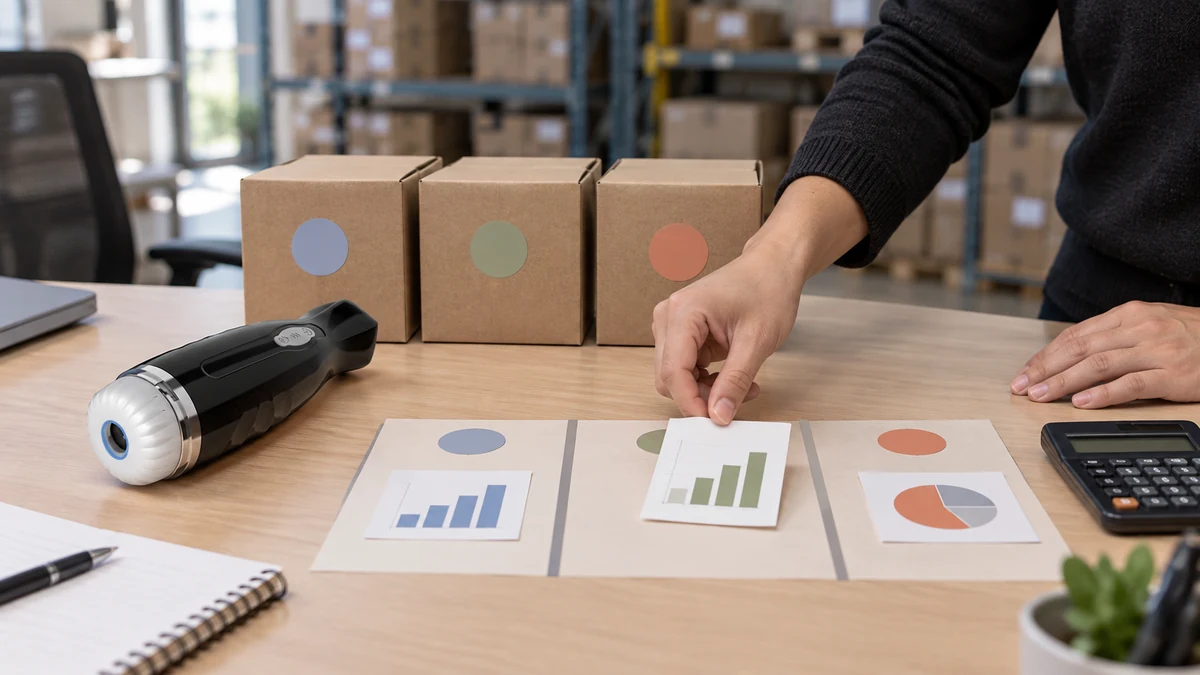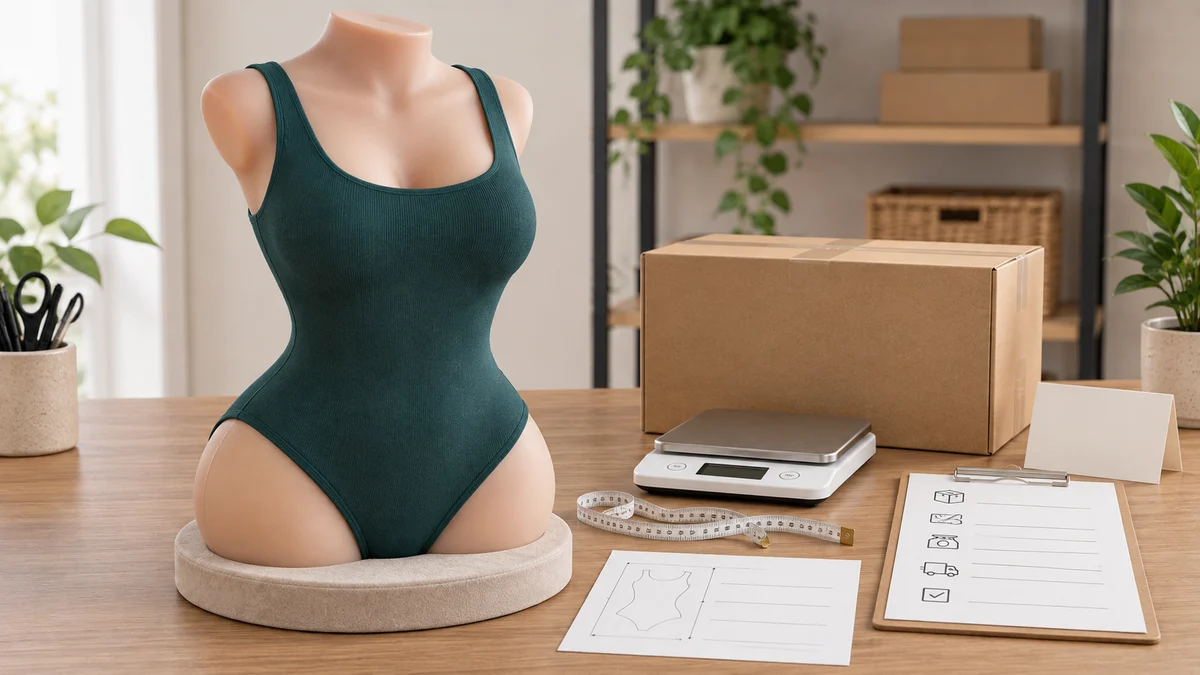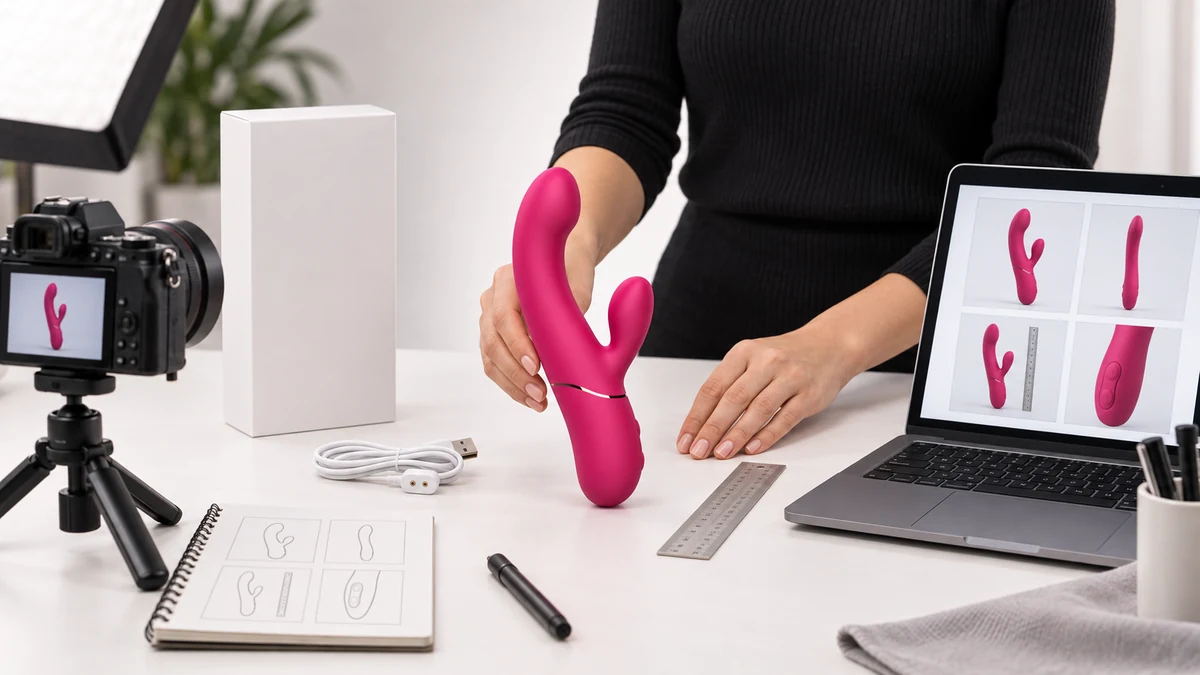
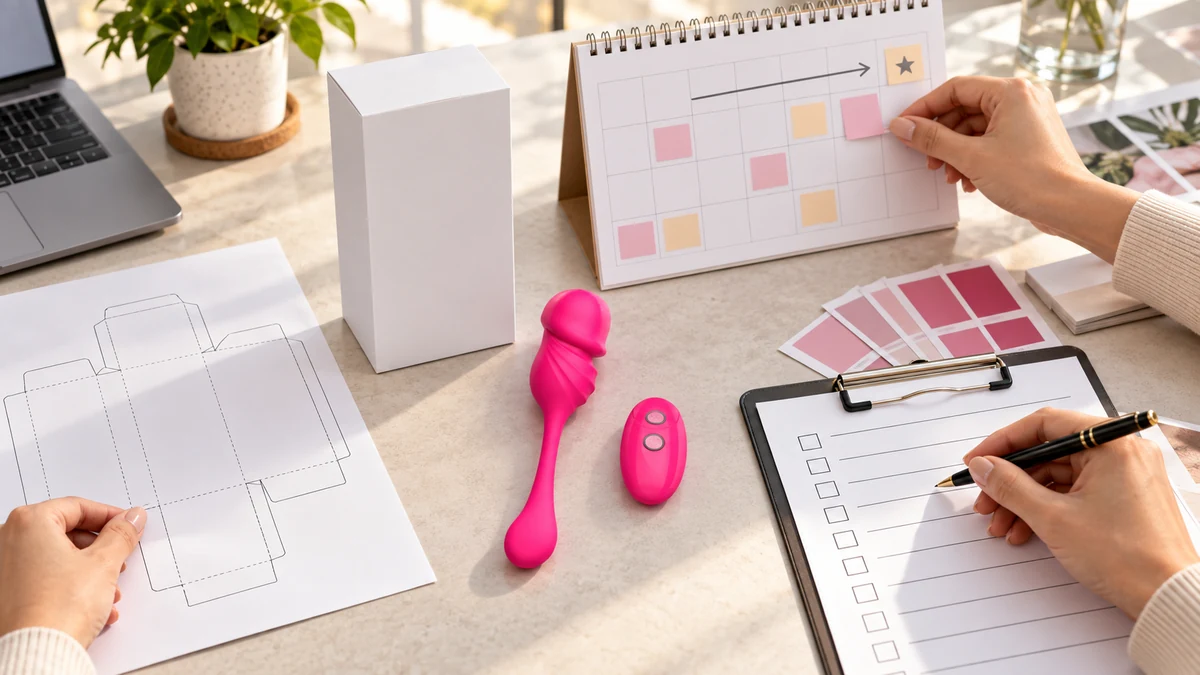
A private label sex toy launch timeline should start with the date when stock must be ready to sell. The launch date is not a production plan. It is the last date in a chain of decisions about the product, sample, packaging, production, inspection, freight and listing assets.
Many private label projects lose time in the gaps between those decisions. A brand may approve the product but leave the box structure open. The artwork may be finished before the real insert size is confirmed. Production may be discussed before the sample acceptance points are written. None of these problems looks serious on its own, but together they can turn a planned launch into a sequence of emergency changes.
The practical answer is to plan backward from the date when stock must be ready to sell. Shopify also recommends setting the launch date and working backward through the milestones that must be completed before release. The timeline below applies that idea to a private label sex toy project.
The week ranges are planning examples, not promised lead times. The selected product, customization depth, packaging route, quantity, destination and transport method must be confirmed for each project.
First decide what the launch date really means
Before building a timeline, choose one operational definition:
- The date the product is announced.
- The date the ecommerce listing becomes available.
- The date stock must reach the local warehouse.
- The date stock must be on a retail shelf.
These are not the same milestone. If a retailer needs stock on shelves on 1 March, arrival at the port on 1 March is already late. The plan still needs time for customs clearance, receiving, labeling, system setup and store allocation.
For most buyers, the most useful anchor is the date when saleable stock must be available in the destination market. Work backward from that point.
Use a planning window of about 20 to 24 weeks as a starting frame
For an existing product with manageable private label changes, a brand can begin its first planning pass about 20 to 24 weeks before the required stock date. This is not a universal production lead time. It is a decision window that creates room for approvals and a buffer.
Projects with new tooling, electronics changes, new testing requirements or complex packaging may need more time. A simple ready stock route may need less. The purpose of the window is to expose dependencies before the buyer commits to a public launch date.
About 24 to 20 weeks before stock is needed: lock the commercial job
Define the product's role before asking for samples.
Write down:
- The target customer and sales channel.
- The first market or markets.
- The intended retail price position.
- The core function that cannot change.
- The planned opening quantity.
- The customization level under consideration.
At this stage, compare three routes: ready stock, light private label and deeper customization. Our guide to ready stock and private label sex toys explains why these routes should not be quoted as if they were the same project.
The decision gate is simple. If the brand cannot explain what should be different and why, it is too early to lock a private label route.
About 20 to 16 weeks before stock is needed: confirm feasibility and the sample route
Shortlist exact base models, not only reference photos. Similar looking products can have different materials, motors, controls, charging systems, dimensions and packaging conditions.
Ask the supplier to separate:
- What is already available on the selected model.
- What can change without new tooling.
- What requires a new component, mold or software change.
- Product MOQ, color MOQ, logo MOQ and packaging MOQ.
- Which facts are confirmed and which still need verification.
Then choose the sample route. An existing sample may confirm shape and function. A color sample may confirm appearance. A final preproduction sample should represent the approved product, contents and packaging closely enough for the brand to make a production decision.
Do not treat every sample as if it proves the same thing.
About 16 to 12 weeks before stock is needed: test the sample against written acceptance points
The sample review should answer specific questions:
- Is this the correct base model and size?
- Do the controls and stated functions match the brief?
- Is the material and surface finish the approved version?
- Is the logo position acceptable?
- Are the charging accessory and package contents correct?
- Which product information can be used in the listing?
- What must still change before production?
Record one change list with an owner and a deadline for every open item. Verbal approval is not enough when product, packaging and marketing teams are working from different files.
If several variants are still being compared, use the same test criteria for each. The sex toy product variant testing guide explains how to avoid changing several variables at once.
About 14 to 10 weeks before stock is needed: lock packaging inputs in the right order
Packaging should not be designed around guessed dimensions.
Confirm the exact product, accessories, manual, cable, insert requirement and the information that must appear on the box. Then confirm the structural dieline. Only after that should the final artwork be approved.
Also compare the product order quantity with the printed packaging MOQ. Packaging suppliers often have their own minimum run. Larger runs may reduce the unit cost, and holding approved spare packaging can make a repeat order faster. However, excess packaging also locks the brand into the current artwork and product configuration.
The decision is not simply whether extra packaging is cheaper. It is whether the brand is confident that the next order will use the same box. Our sex toy packaging requirements guide lists the items to approve before printing.
About 10 to 6 weeks before stock is needed: confirm the real production window
Production timing should be confirmed only after the supplier knows the approved product, quantity, color, logo, packaging status and required delivery point.
At this gate, request a project specific schedule that includes:
- Material or component preparation.
- Product production and assembly.
- Packaging production when separate.
- Packing and final quantity confirmation.
- Inspection or sample retention plan.
- Earliest realistic cargo ready date.
Do not convert an early estimate into a promise. If packaging is still open, the cargo ready date is still conditional.
About 6 to 3 weeks before stock is needed: prepare the shipment and receiving work
The exact window depends heavily on destination and transport method. Confirm the freight route with real carton quantity, carton dimensions, gross weight and battery information when applicable.
At the same time, prepare the commercial invoice inputs, packing list inputs, shipping labels, consignee details and destination receiving requirements. The listing team should already have verified product data, approved images and package contents.
Do not wait for shipment day to discover that the warehouse needs a different carton label or that the ecommerce team is missing a confirmed product dimension.
Keep a buffer for decisions, not only transport
A buffer is often described as extra shipping time. That is too narrow. Projects also need decision buffer.
Use the buffer for:
- A sample change that must be checked again.
- Artwork correction after the real dieline is confirmed.
- A packaging supplier queue for a small run.
- A component or color availability change.
- Destination receiving or customs preparation.
If the buffer is consumed early, the brand should choose among three honest options: move the launch date, simplify the customization, or split the launch into a smaller first release and a later expanded version.
Use one launch control sheet
A useful control sheet has six columns:
- Milestone.
- Required input.
- Decision owner.
- Planned approval date.
- Confirmed status.
- Consequence if late.
The last column matters. It turns a vague delay into a business decision. If sample approval is late, the consequence may be a later packaging lock. If packaging lock is late, the consequence may be a later production or cargo ready date.
How AIYUEWEI Can Help
AIYUEWEI can help a brand turn a target stock date into a project specific dependency map. We can compare ready stock, light private label and deeper customization routes, then identify which route matches the required differentiation and available time.
For shortlisted products, we can organize verified specifications, available options, MOQ layers, sample decisions, packaging inputs and the supplier milestones that still require confirmation. We can also keep the product, packaging and media requirements in one version controlled brief so the buyer is not approving different versions in separate chats.
We do not present an illustrative week range as a guaranteed lead time. A workable schedule is confirmed against the selected model, customization scope, packaging route, order quantity, destination and transport plan.
Frequently Asked Questions
Can AIYUEWEI work backward from a fixed retail launch date?
Yes. Send the date when saleable stock must be available, the destination, target quantity, preferred product and customization scope. We can map the decisions that must happen before quotation, sampling, packaging, production and shipment. The final timing still depends on verified supplier and carrier inputs.
What is the first thing to simplify when the schedule becomes too tight?
Usually the first comparison should be between an existing product route and a deeper custom route. A standard color, existing packaging structure or ready model may remove an approval dependency. The right change depends on which element creates the delay and whether that element is important to the brand's customer promise.
Can extra printed packaging be stored for the next order?
It can be a useful option when the packaging MOQ is higher than the product quantity and the next order is likely to use the same approved design. Before choosing it, confirm storage responsibility, quantity, condition checks, artwork version and what happens if the product or legal information changes.
The next step
Send AIYUEWEI the required stock date, destination market, target quantity, product reference and customization list. We can return a milestone map showing what is fixed, what is still open and which decision must be made first.
External reference
Shopify, How to Nail Your Product Launch in 2026, recommends agreeing on the launch date, goals and owners, then working backward through the milestones needed before release.